


Contents
Hello from the rainy Pacific Northwest
Note: AMPRnet multi-factor authentication
Notice: Inovato closing online store December 19
In the pipeline
Kenwood NX-1302 NXDN handheld radio
Orange Pi single board computers
M1KE handheld WLAN IP transceiver
This week
I made my own HamClock and it was easy
HRWB 252: AllStar ROIP linking with David NR9V from AllScan
How does AllStarLink actually work, I asked
Another tiny PC added to the mini server rack
DVSwitch Mobile users unable to use Web Tranceiver mode
Why aren’t comments working on EtherHam?
Short stack
Closing

Hello from the rainy Pacific Northwest
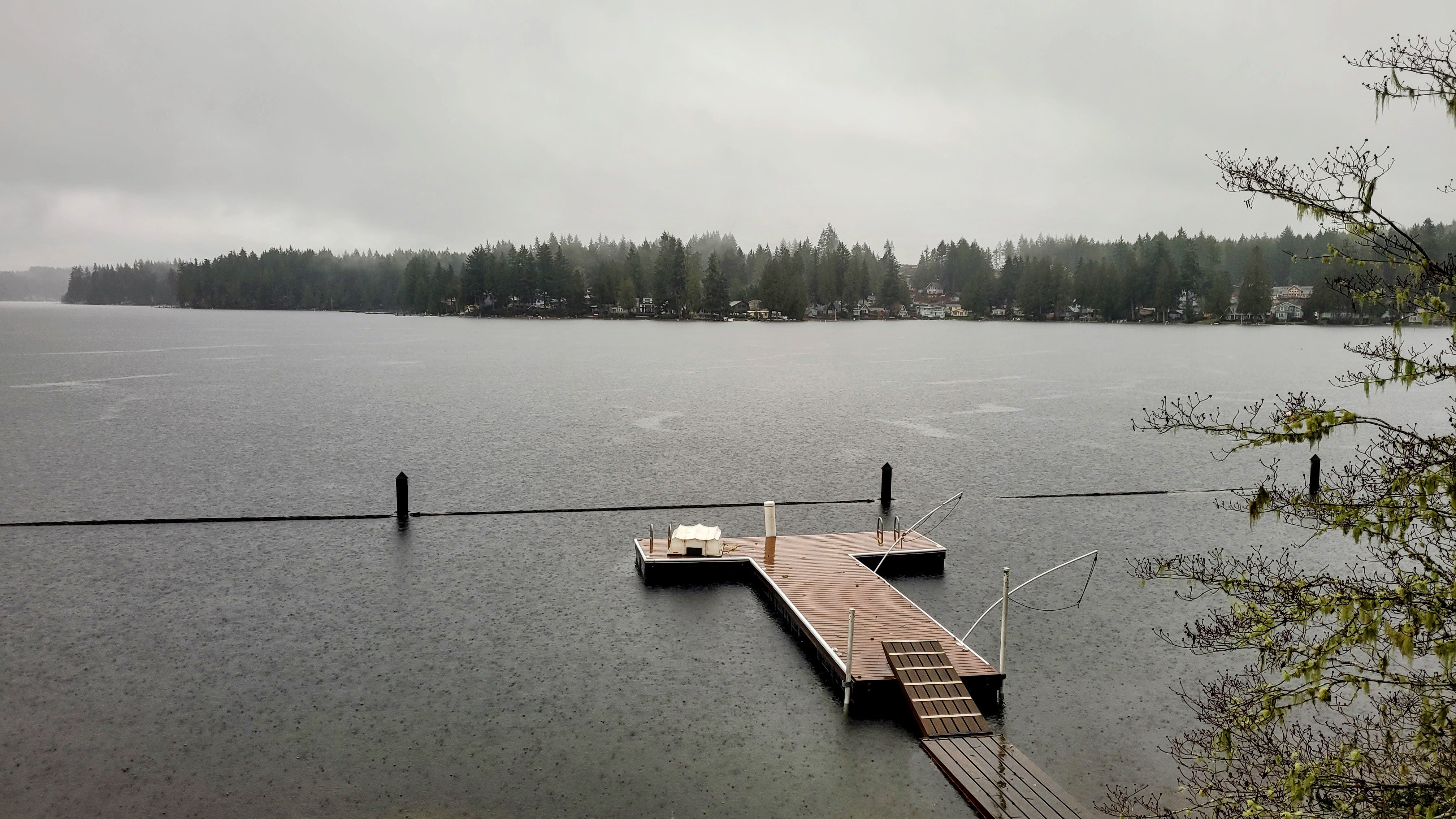
Washington and Oregon and part of California have been pummeled by a couple of atmospheric rivers, resulting in significant flooding in some areas, landslides, and related damage to homes and infrastructure including roads. Many people have been, and continue to be, affected.
As I begin this issue of the Random Wire newsletter, the rain is pounding onto the surface of the lake just 100 feet from my window. The surface is peppered with pockmarks from raindrops. The skylights overhead make a particularly percussive sound as the big raindrops plunk down on them. And the lake level is rising quickly (the dock approach is usually nearly two feet above the lake surface).
Being a conservationist, I know that the three primary functions of a watershed are to capture precipitation, store the water, and release it in a controlled manner over time. Well, the ground is saturated so no more water can be stored. It is all running off as soon as it hits. The ground is so soft we’ve had significant power outages from trees falling onto power lines.
It could be worse: it could be a rain on snow and frozen ground event. In those conditions, we can see even more runoff. Fortunately, that is not the case at the moment.
Meanwhile, our local repeaters continue to serve the amateur radio community. Members of the two clubs in Mason County are active on HF, too, so we remain connected to the world. As I grow older in this hobby, I appreciate more and more how helpful are radio amateurs — not just within our radio community, but also through the local community.
Note: AMPRnet multi-factor authentication
AMPR is eliminating SMS as a two-factor authentication mechanism, so if you have an AMPRnet account, check your email for a notice. I was one of those folks using SMS, so the email I received starts with: “You are one of a few dozen Portal users with multi-factor authentication set to use SMS. I’m writing to let you know that we will be discontinuing SMS support in the Portal, including for multi-factor authentication and notifications, and we will be ending the requirement for mobile number verification.”
I chose to switch to Google Authenticator for multi-factor auth. Once you select TOTP in your AMPRnet Profile, you’ll be presented with a QR code. I found I had to open Google Authenticator on my smartphone and scan the QR code from the Authenticator app. That added AMPR to my list on my phone. It also generated a six-digit one-time code that I entered into a form field on the AMPR page, and once submitted, that closed the circle. No more SMS auth on AMPRnet for me!
Notice: Inovato closing online store December 19
Says Michael Burmeister-Brown: “…the time has come to finally close shop. For a limited time, I will still try to answer questions on the forum, but it will also close at some point. The online store will be the first to close as of December 19th, and the final Quadra4K inventory is now sold out.” December 19th is the publication date of Random Wire 161 so if you need a microSD card with a Quadra or Quadra4K image, now is the time to order it.
In the pipeline
I’ve got some articles brewing that you may find interesting. One involves getting a Kenwood NX-1302 NXDN handheld radio working with one of my hotspots. This radio comes from the early 2000s and looks like it was unused. Whether I can get it programmed? That’s what I’m working on now. I had to acquire the programming software and a cable that I hope will work.
I also have a couple of Orange Pi single board computers. The Orange Pi RV2 looks interesting. I also acquired an Orange Pi 5 Plus board. I’m hoping to load OpenWRT on one of them to use as the buffer between my 44net IP addresses (I’ve requested been allocated a /28 block) and my local area network. The fallback for the 44net addresses is a GL.iNet travel router that I can load up with Wireshark.
Setting up the M1KE handheld WLAN IP transceiver for some modes will get covered in the third article in the M1KE series.
This week
I made my own HamClock and it was easy
For $35 and a microSD card, you can easily build your own HamClock that you can access on your local network with a web browser.
HRWB 252: AllStar ROIP linking with David NR9V from AllScan
If you are interested in AllStar, this podcast episode is a must listen. You’ll not only enjoy the usual banter among the regular hosts, you’ll also gain deeper insight into how AllStar works.. The conversation around all the ways AllStar can be used is a bit, well, mind blowing. If you aren’t very familiar with AllStar, or even if you have a personal AllStar node, I guarantee you’re going to learn new things about AllStar.
How does AllStarLink actually work, I asked
I asked the Claude AI “how does AllStarLink actually work?” The long-but-understandable response seems pretty good to me. For example, Claude explains what AllStarLink is: “AllStarLink is a network system that connects amateur radio repeaters, remote base stations, and hotspots worldwide using Voice over Internet Protocol (VoIP). Think of it as a phone system for radios—instead of dialing phone numbers, you “dial” node numbers to connect different radio systems across the internet.”
Another tiny PC added to the mini server rack
I was holding out for another Lenovo ThinkCentre M900 tiny PC with an i7 CPU but those have become scarce. I did find one with Windows 11 Pro and a 256 Gb SSD. It came with two 8 Gb sticks of RAM. The price was fair so I hit the Buy It Now button.
DVSwitch Mobile users unable to use Web Tranceiver mode
DVSM users are not able to get a token from AllStarLink. While ASL was cleaning up some very old code on their web site, the made a change that temporarly blocked getting the proper response from ASL to DVSM.
Why aren’t comments working on EtherHam?
Update: comments are now working on the EtherHam website.
Short stack
From the EtherHam mega feed and other sources:
The Federated Amateur Radio Packet Network Wiki is a valuable resource for hams looking to learn more about packet radio networks. The wiki provides documentation, user tools, and site tools to help users navigate and utilize the network effectively. (And they are using one of my favorite wiki systems called DokuWiki, which also happens to be the system used by the evolving EtherHam wiki.)
Looking for the Perfect Ham Radio Holiday Gift? You Can’t Go Wrong with the Icom IC-7300. My opinion: it’s hard to disagree with this recommendation.
One Big Server Is Probably Enough: Why You Don’t Need the Cloud for Most Things — Modern servers are incredibly powerful and reliable. For most workloads, a single well-configured server with Docker Compose or single-node Kubernetes can get you 99.99% of the way there - at a fraction of the cloud cost.
Upcoming Changes to Let’s Encrypt Certificates means you won’t need to have a domain name to obtain a short-lived Let’s Encrypt certificate: “This switch will also mark the opt-in general availability of short-lived certificates from Let’s Encrypt, including support for IP Addresses on certificates.” This is a big deal for those of us with some IP-based resources that are connected to the internet but have no domain name.
My Favorite Self-Hosted Apps Launched in 2025 includes names like BentoPDF, BookLore, Docker Compose Maker, IronCalc (an online calculator), and more. If you are interested in self hosting applications, this list is worth reviewing.
So how good is digital voice on HF? This is a two-minute-long YouTube demonstration:
Closing
This is the second issue of the Random Wire after I switched to hosting content on a separate website (EtherHam.com). I hope this is working for you. I’m actually finding it a bit easier because I’m able to keep several articles going in draft form at EtherHam. When writing on the Random Wire platform, those articles are part of a much longer piece and it’s easy to get a bit lost in the long, monolithic text. It seems easier to update the more granular, smaller articles as I work through a project. This means it will be easier to generate higher quality content for you!
Christmas Day will have concluded when the next issue of the Random Wire is published. From my household to yours, we wish you a wonderful holiday season, no matter how (or if) you observe the holiday.
Remember to touch a radio every day!
73 from all of us at the KJ7T QTH,

Great issue, as always. Cited two items out of this issue in Zero Retries 0233.