

Contents
Overview
Correction to Issue 165
Mayday from Belarus
M17 Poll
HamClock 4.22 Released This Week
The M1KE Worked When HF Wouldn’t
AllStar Node 57945 and IAX
Putting Your AllStar Node on the 44Net
Projects On The Bench
New Meshtastic Device
Who Had KJ7T Before Me?
Random Wire Short Stack
Not Radio
Potensic ATOM 2 Drone: First Flights
Need a catchy domain name?
Animation of worlds largest Ice Age floods
Orca whales in Puget Sound (map)
An AI-generated comment on EtherHam?
EtherHam domain branding
Zero Retries Moving To Ghost, Random Wire Isn’t
Closing

Overview
Issue 166 opens with a correction to information provided in issue 165 and closes with a note about Zero Retries. The great Zero Retries newsletter is moving to a different system. As of today, you should be able to reach the new site at https://www.zeroretries.radio/.
Right after the correction is a short piece I find incredibly disturbing: MAYDAY from the airwaves: Belarus begins a death penalty purge of radio amateurs. Find more information below.
What is most important to you when it comes to the M17 protocol? There’s a simple poll available below so we can learn from each other.
I’m getting familiar with a new drone that is not made by the big dog in the recreational drone space. Related, I’m trying a V30-rated microSD card which is supposed to provide hiccup-free video recording. I’m also trying an “airdrop device” to see if my little drone can lift some monofilament line over a tree.
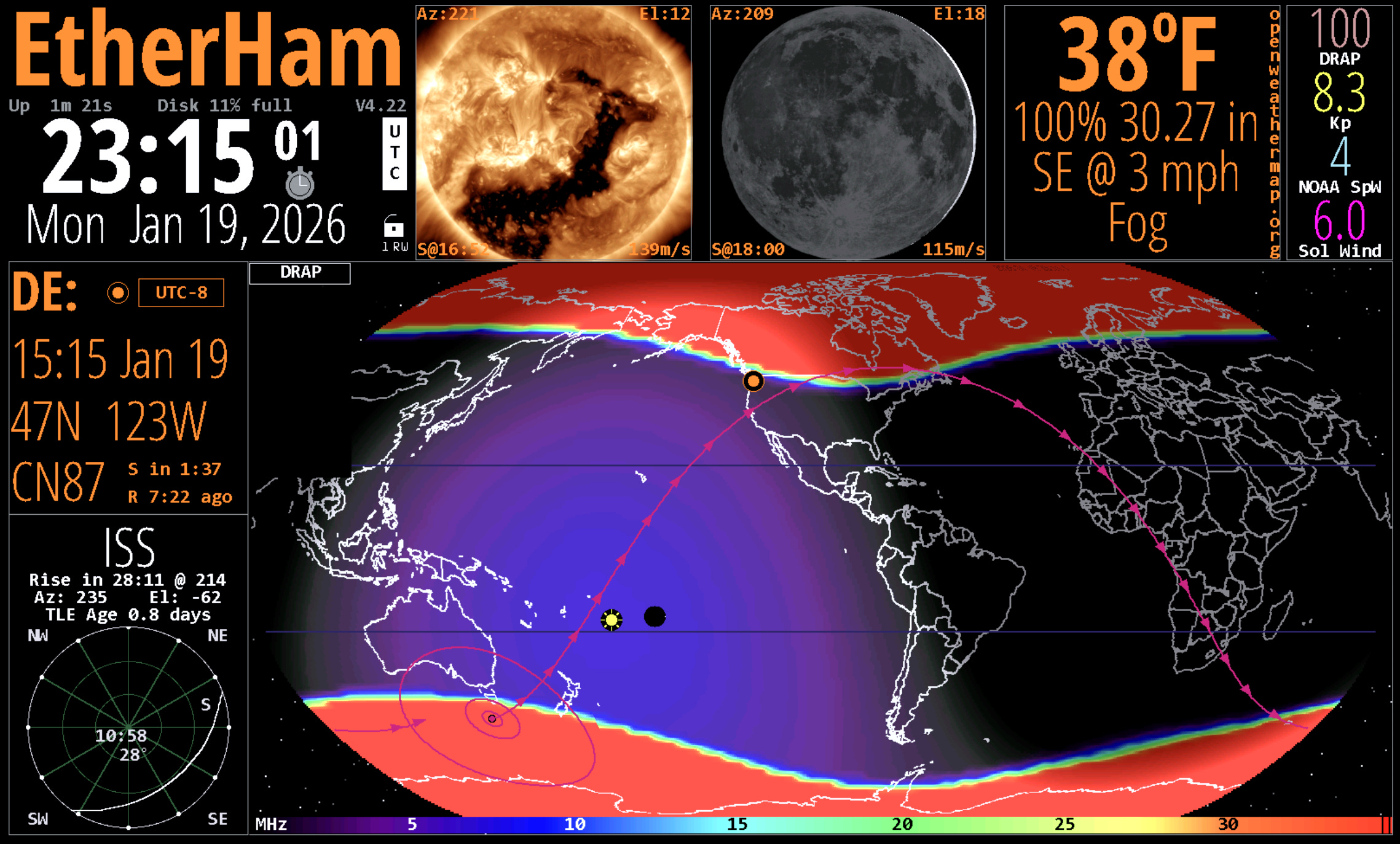
HamClock 4.22 was released this week. I installed it on my home instance of HamClock.
I have a list of projects waiting for my time and attention. I did get started on one of the items this week but then managed to brick the new Meshtastic device. It is unknown at this time whether I permanently bricked it.
How about a guide to putting your AllStar node on the 44Net service? Got that. I also have a tidbit about DMR (digital mobile radio).
Who had your callsign before you? I honor the silent key who had KJ7T before me.
A long Short Stack section is presented this week. (Yes, I recognize the oxymoron in that sentence and am happy about it.) A small digital-to-audio converter (DAC) is noted and I’m using it with a pair of IEMs (in-ear monitors). There is also a note about selecting DNS providers, and as a consequence of reading that content, I switched my home DNS to Quad9.
Then there are some Not Radio items, including a note about the EtherHam brand.
Finally, learn about the move being made today by Zero Retries.
Correction!
Let’s start this issue with a necessary correction. In issue 165, I wrote about the new AllScan UCI200 device, but inadvertently called it the UCI120 in several places. That has been corrected online. Apologies to David NR9V of AllScan for that error.
MAYDAY from the Airwaves: Belarus Begins a Death Penalty Purge of Radio Amateurs
Thank you to Ria Jairam N2RJ for bringing this disturbing news forward in her Substack, Ria’s Ham Shack. The article is on Medium, titled MAYDAY from the airwaves: Belarus begins a death penalty purge of radio amateurs.
I try very hard not to touch on politics, but purging radio amateurs from an entire country is simply unacceptable. If you are in a country at war with another country, I can understand suppressing the use of amateur radio, but it makes no sense to me to actually incarcerate amateurs out of fear they might say something wrong.
But logic does not exist in a state ruled by technical savages. To them, the fact that you can solder an antenna, track a weather satellite, or understand the physics of wave propagation makes you an existential threat. If this crackdown had reached me when I was still active in the country, my own call sign would have certainly placed me in front of a firing squad.
Chilling? Yes. Now that I’m ingesting the information, I just don’t know what to do with it. It is not sitting comfortably.
M17 Poll
What is most important to you when it comes to the M17 protocol? It will be informative to all of us to see what folks are thinking.
Unfortunately, Substack polls are basic, binary-choice affairs, with a question, then options for this-or-that responses. I don’t find any capability to add additional questions, or to configure the responses to be more, i.e., this-and-that instead of this-or-that. Such polls are extremely limiting.
Below is a link to a Google Form configured as a poll. It does not collect your email address. One poll per person. After submitting your responses, you’ll get a link to see a summary of previously submitted responses. And of course, I’ll publish a final summary in a few weeks.
Thank you for weighing in on M17!
By the way, does anyone know how to send text over M17 with Droidstar? When connected to an M17 reflector, there is an SMS field at the bottom of the Logs screen. I sent a test text over my M17-PNW reflector, but I find no guidance on how to do this, or what to do with this. I wonder if all other stations connected to the reflector potentially receive such a message. Or perhaps there is an addressing protocol I’m unaware of.
HamClock 4.22 Released
I discovered this when I ran updates on my HamClock system. It turns out that HamClock 4.22 was released on January 17th, just a few days ago. Post-installation, my system is working fine.
To install, first I SSH’d into my HamClock box (the default login is user = root and password = 1n0v@t0 [those are zeroes]) and ran sudo apt update, then sudo apt upgrade -y.
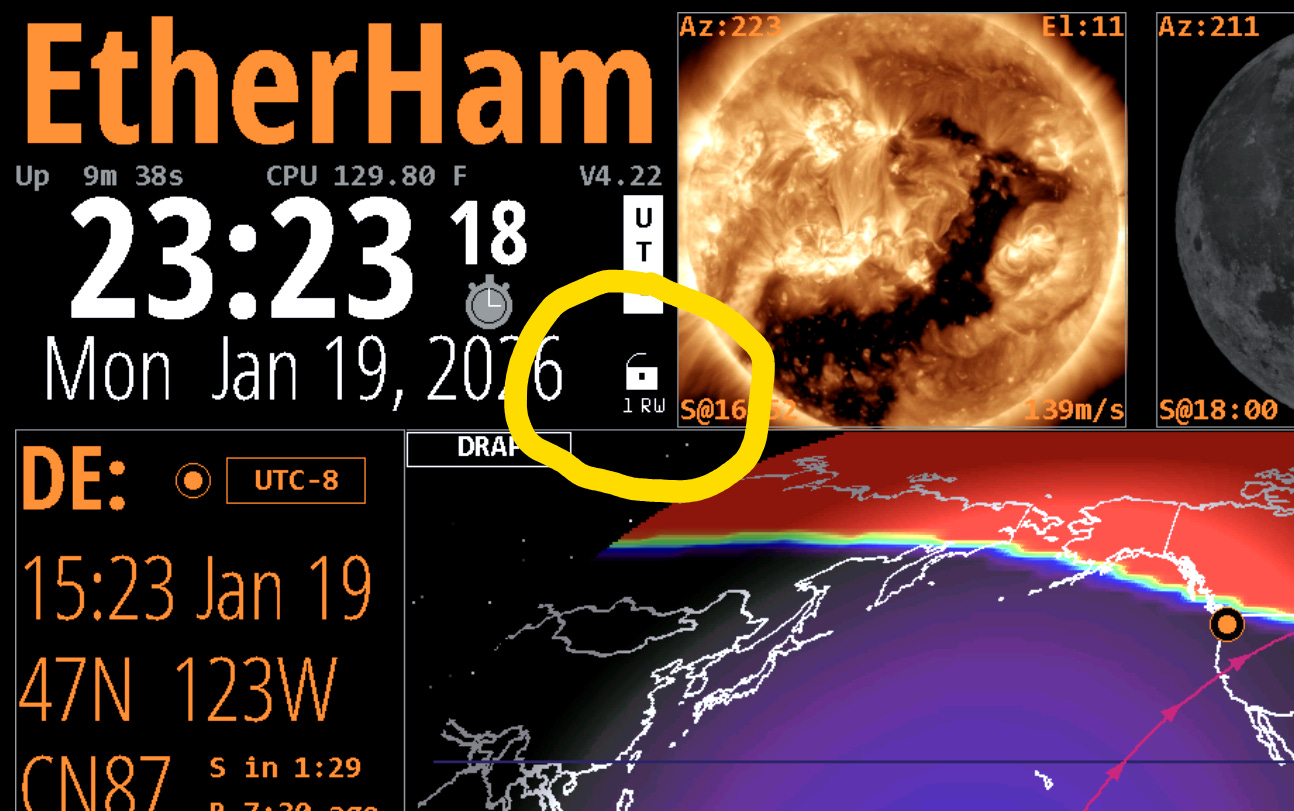
Once the operating system was upgraded, I clicked the lock icon:
And then selected Restart HamClock:
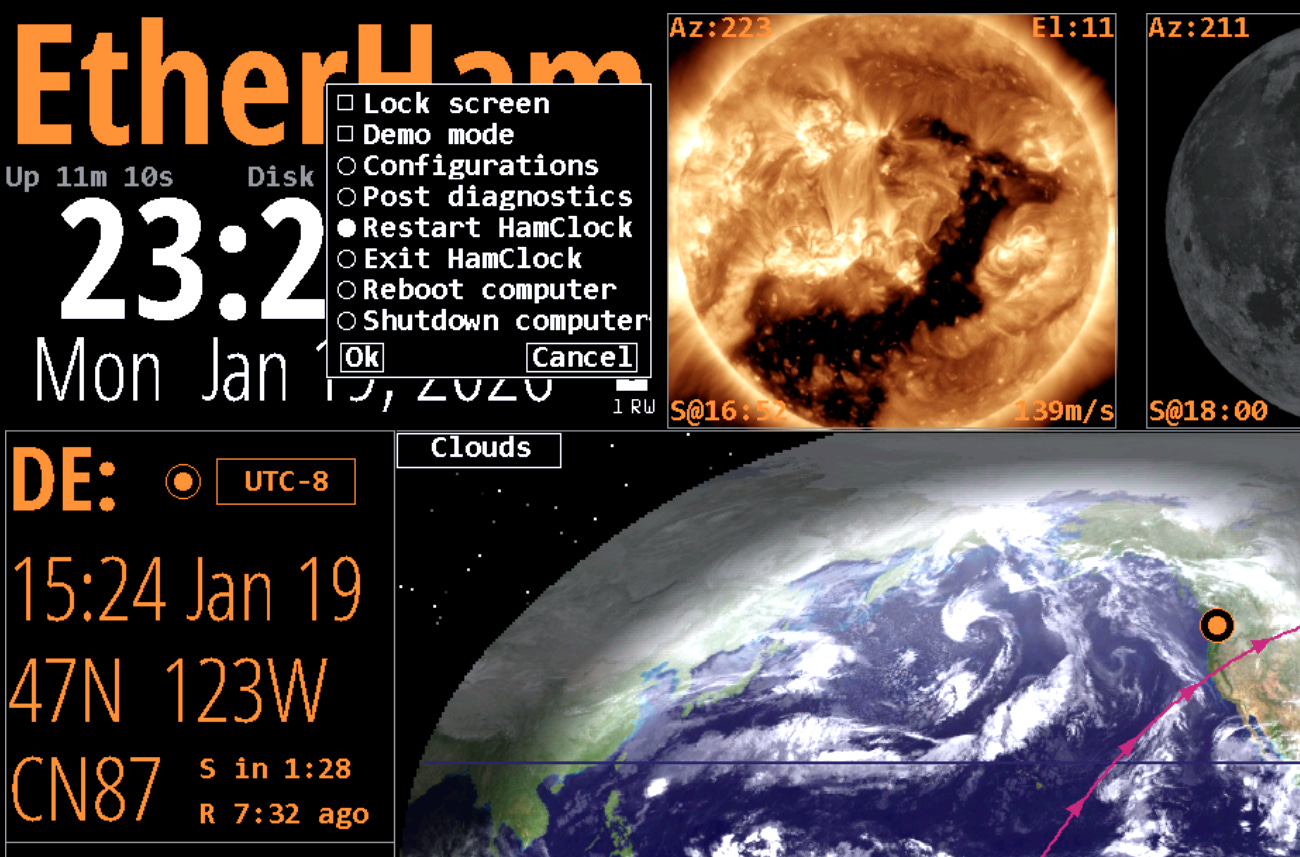
When HamClock restarted, I was presented with a question about whether I wanted to upgrade to v. 4.22. I proceeded with the upgrade. The HamClock has been stable since then.
The M1KE Worked When HF Wouldn’t
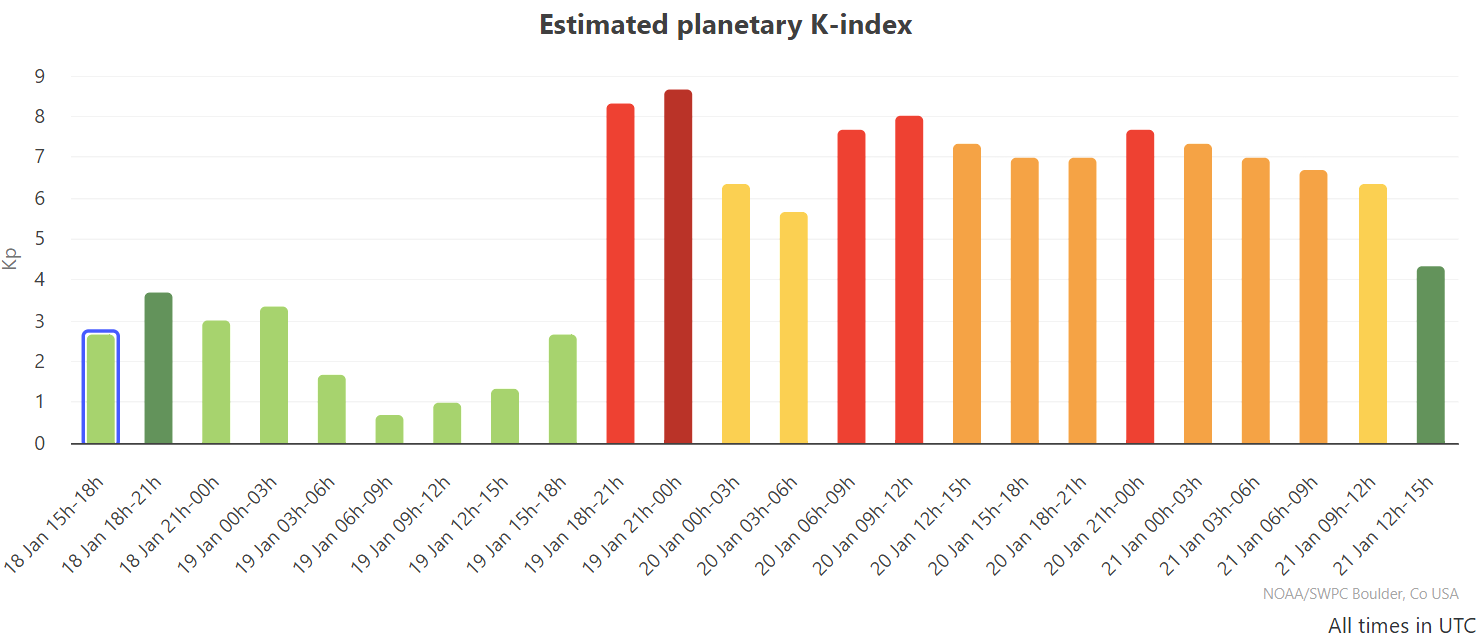
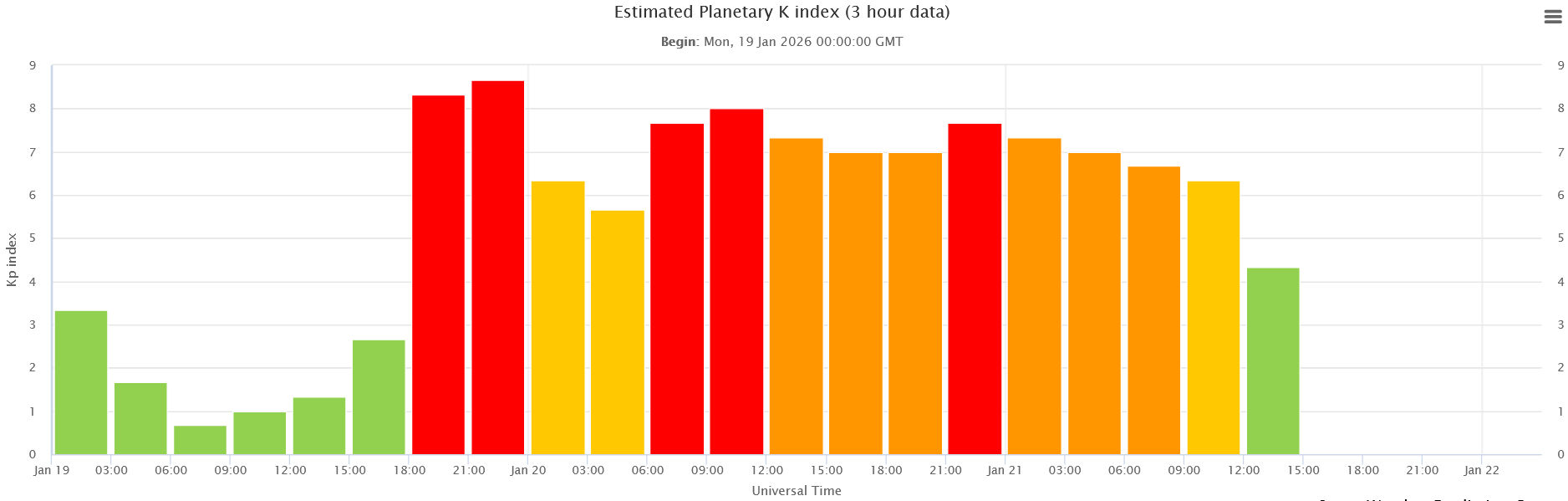
The amazing CME (coronal mass ejection) this week was likely something that thrilled radio amateurs who are interested in space weather, and perhaps upset some hams who lost access to HF bands. I found the event fascinating and used my HamClock to watch the changing intensity of the solar storm.
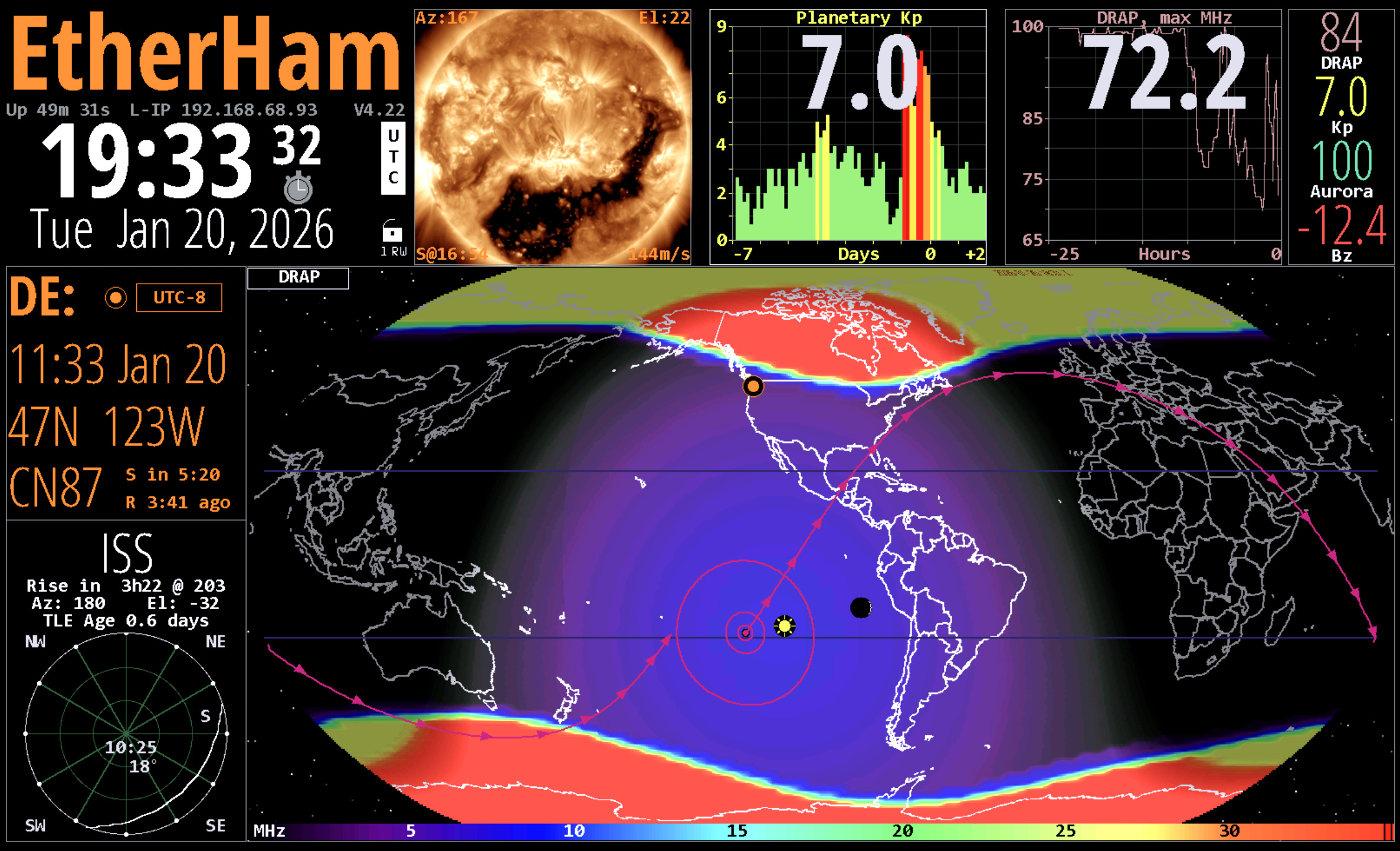
And it was an intense event as shown in the graph from SpaceWeatherLivecom:
During my morning drive for coffee a few days ago, I heard folks on the local C4FM/WIRES-X system complaining about dead HF bands. One of the net participants was a ham vacationing in Mexico and using his M1KE to talk with us. That was the moment I realized that internet-connected radio can support communications when other systems fail.
What’s that ARRL tag line about amateur radio in emergencies? When All Else Fails®. In this case, it was HF that failed, but internet-connected digital radio did not break. A few years ago, a common sentiment seemed to be that internet-connected radio was more of a novelty than something reliable and useful. The reality is that in an emergency, we need to use whatever works to get and give information, not just what we prefer to use.
The M1KE can certainly be a valid, valuable tool in a situation where HF bands are closed and you need to communicate over long distances. Personally, I try to not depend on any single technology because I abhor single points of failure. Having multiple tools that work differently to support meaningful information transfer in an emergency is how we can be resilient and effective when other systems break.
AllStar Node 57945 and IAX
I’ve been helping a radio amateur who is trying to get Droidstar to connect to his AllStar node. To do that, I offered up a connection to my “node in the cloud” AllStar node 57945. This also gave me an excuse to touch my Droidstar and DVSwitch Mobile settings for node 57945 before a new PoC (Push-to-talk over Cellular) device arrives.
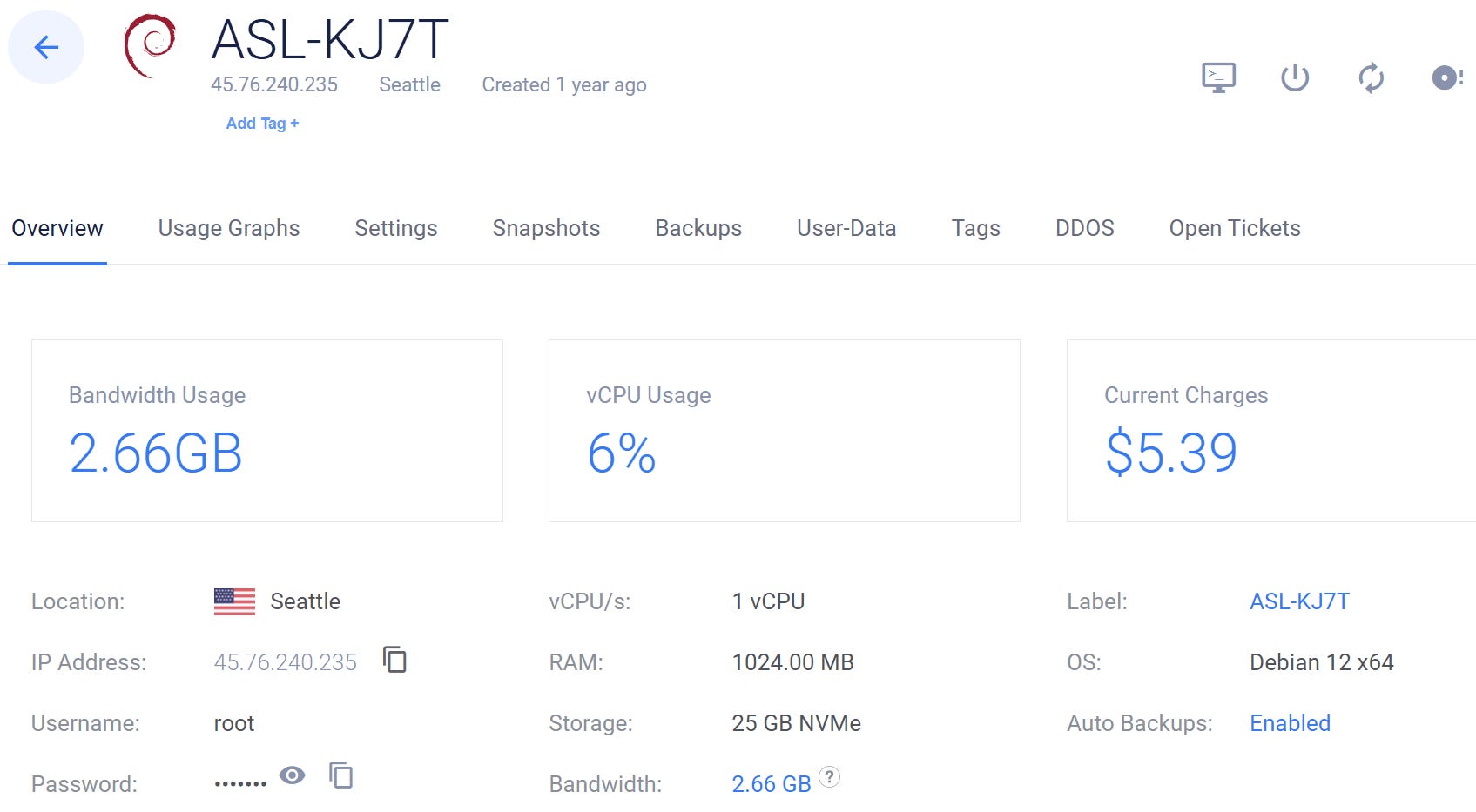
Node 57945 runs on a Vultr.com server in Seattle. You can access the AllScan favorites dashboard at https://kj7t.net.
This system runs ASL on Debian 12, per the Vultr dashboard:
It is a bit surprising to me how often I use my “node in the cloud” instead of a local instance. I often add one of my ASL nodes at home when I want to use a handheld radio to connect. I also use DVSwitch Mobile and Droidstar through node 57945 when I’m traveling. I expect I’ll do even more of that with the new PoC device arriving soon.
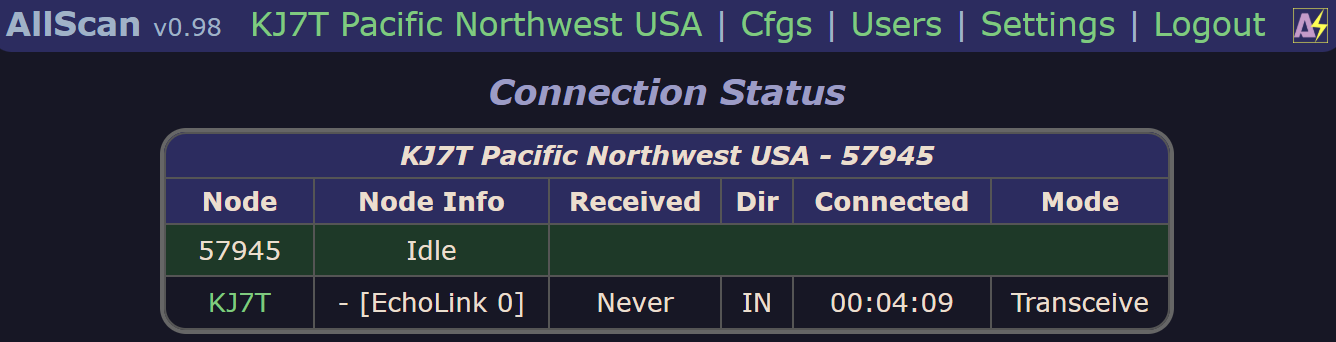
When I connect with Droidstar, AllScan shows my link as an EchoLink connection:
Allmon3 shows it as a “Direct Client” connection:
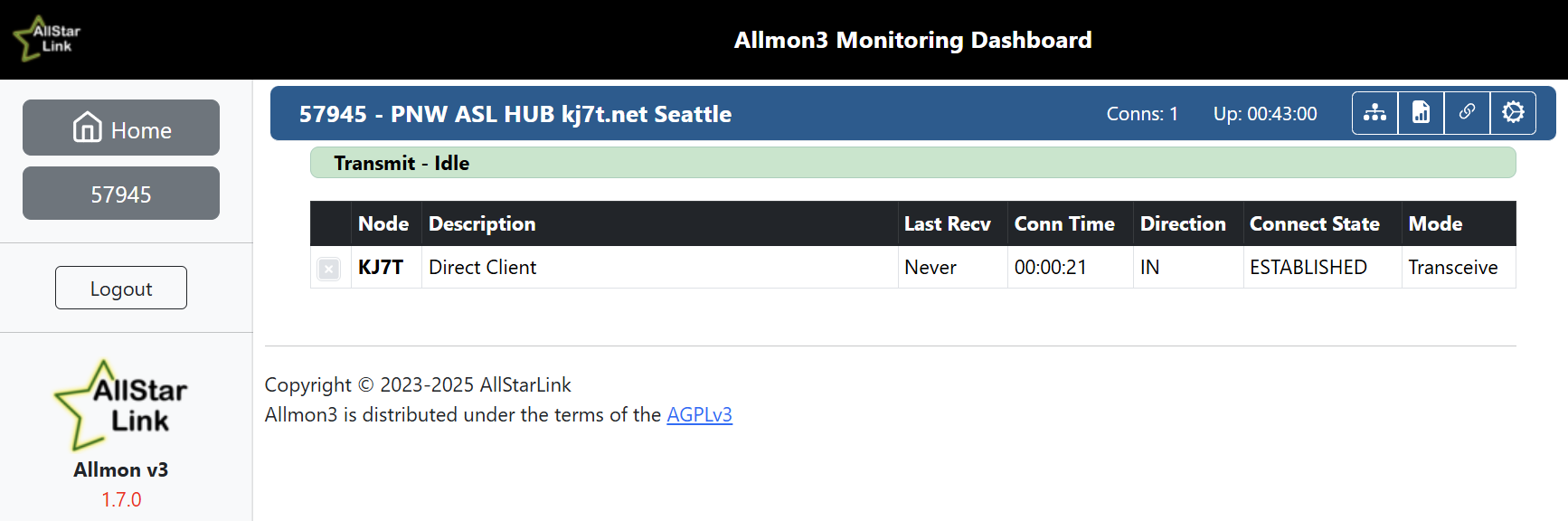
(As an aside, when I connect through DVSwitch in WT [Web Transceiver] mode, neither AllScan nor Allmon3 show the connection. Interesting.)
In node 57945’s iax.conf file, I have the allstar-public context configured as shown below. And for those who ask, yes, the secret (i.e, the password) is allstar.
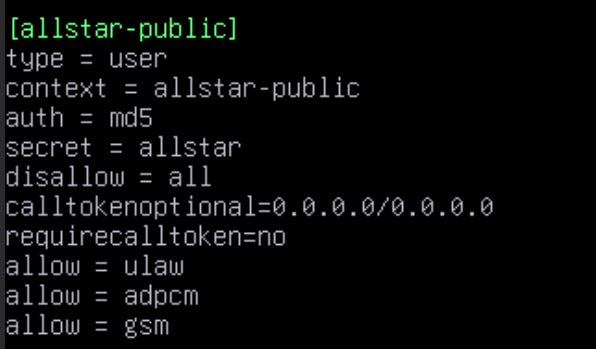
I include this information as an example of a working configuration. For my instance of Droidstar, the hostfile format that works for me (Hosts tab) is:
IAX 57945 wt 4569 allstar-public allstarOf course, that won’t work unless you also have my AllStarLink web portal password. That is something I’m not going to share.
By the way, if you are itching to use M17, it is a snap to do so with Droidstar. On the Droidstar home screen, select the protocol and then select a reflector from the pulldown menu. Hit the Connect button and it should work. It is actually slightly more complicated than this but really not much!
44NET: How to Put Your AllStar Node on 44Net Connect
This is great guidance if you are wanting to do this, and I do want to do this! Thank you to David N3BKV for this information. Here’s the link: https://hamradiohacks.blogspot.com/2026/01/how-to-put-your-allstar-node-on-44net.html
If you’re running an AllStarLink node — especially behind CGNAT (like Starlink or LTE/5G) getting reliable connectivity into the wider AllStar network can be tricky. Traditional port forwarding often fails because you don’t control your public IP and it can be changed randomly by your ISP. Enter 44Net Connect and WireGuard — a simple, robust way to tunnel your node into the global AllStar network with a routable IPv4 address.
Projects
I have some things waiting for me on the bench.
Cheap headset node — I ordered an MPOW USB headset to try a simple, cheap AllStar solution. I’m not expecting much, but if it is a way to help people get started with AllStar, I want to try it.
Minimal AllStar node — I do want to explore this project.
CC1200 hat — I also have a CC1200 hat for M17 (actually, I have five in a box downstairs) that I haven’t tried yet. It’s on the list. I have a guide to follow. And now there is even an installation script!
M17 handheld radios — I need to push updates to my two CS7000 handheld radios. (Note to self: get this done!)
Meshtastic tracker—It’s orderedand should be here any day. I’m particularly interested in the built-in environmental sensors and how well they work. I can see this as an easy way to monitor a boat or travel trailer.It arrived, see below.M1KE — I want to try many different configurations of the M1KE. This is almost an all-in-one amateur radio communications device that really could change the game for many radio amateurs.
PoC radio — I’m waiting on delivery of the Uniwa F400 Network Radio 4G LTE Rugged Phone Android 15 PTT Walkie Talkie Unlocked PoC Radio 4.0 inch Touch Screen Support Zello and Real PTT. At minimum, I’ll put DVSwitch Mobile and Droidstar on this device. I may add a data plan to this PoC radio to give me highly mobile access to many modes.
Meshtastic Tracker
This is the item crossed out in the Short Stack list above. The Elecrow ThinkNode M3 is configurable as a tracker or as a Meshtastic node. The tiny instruction sheet that comes with it has two QR codes: one for the tracker manual and one for the Meshtastic manual.
This thin, square device easily disappears into a pocket or bag.
For the rest of the write-up on the ThinkNode M3, see Elecrow ThinkNode M3 Meshtastic Tracker at EtherHam. Here’s the kicker: I think I already bricked it.
DMR Tidbits
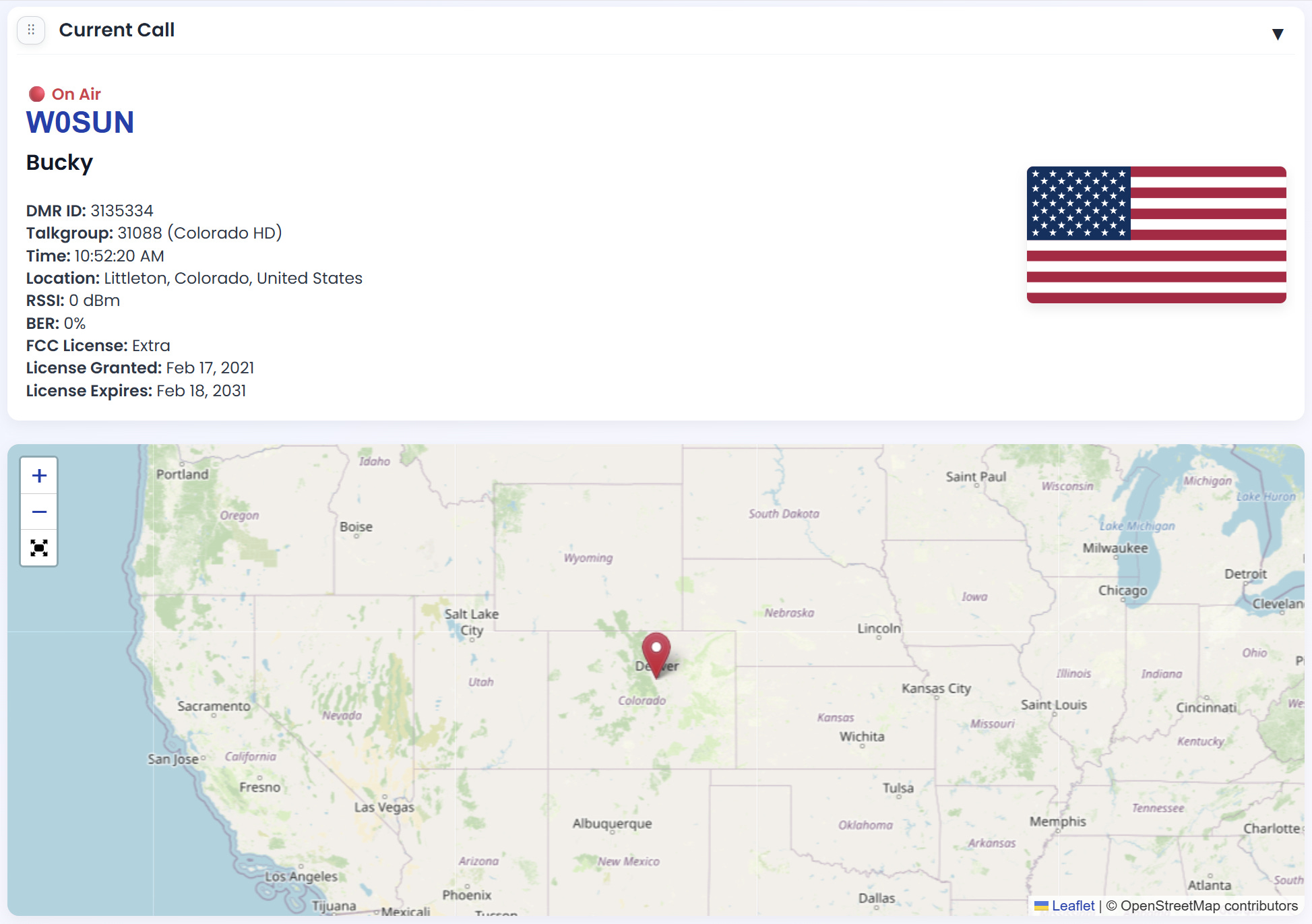
DMRmap.app is a real-time listener for popular DMR networks. Choose a network and talkgroup to see active callers plotted on a map. This is a handy tool when participating in nets with people who are using DMR.
Who Had KJ7T Before Me?
Meet Ronald Barlow KJ7T(SK). Ronald had the KJ7T call sign before I got it. He was a telegraph operator with the Marines and later a software engineer for Bell South (which later became Qwest). I remember him each year on his birthday (May 30), just a few weeks after mine. I’m honored to be the caretaker of the KJ7T call sign after Ronald. Someday, someone will have it after me. I hope it will have more great history behind it when that day comes.
Random Wire Short Stack
How about a modern PC inside a keyboard? Pricing is unknown at this time. See HP EliteBoard G1a Next Gen AI PC.
Kasm Workspaces 1.18.1 is a self-hosted solution that allows you to run different OSes in your browser. “Stream your workspace directly to your web browser on any device and from any location.”
Here is a simple, inexpensive ($22) DAC (Digital Audio Converter) that works with a 3.5mm headphone plug and a USB-C port on your device. Moondrop Echo-A 32Bit/384kHz Portable USB Type-C to Headphone DAC/AMP with 3.5mm Audio Jack Adapter (affiliate link). I am using this with my Soundbrenner IEMs (in-ear monitors).
How about JS8Call for Android? Find it at https://github.com/JS8Call-improved/Android-port/releases.
How to Choose the Best (and Fastest) Alternative DNS Server. I used
https://dnsspeedtest.online/ to guide me to a faster DNS server. For me, it proved to be NextDNS and Quad9. I chose Quad9: An open DNS recursive service for free security and high privacy.
7 genius uses for an old laptop you probably haven’t thought of. “Make it an anonymized PC” seems particularly useful.
I ditched proprietary Markdown editors for this open-source alternative. I do like to use Markdown, and this software has an ARM64 version that works with my special Windows laptop. “One of VSCodium‘s…biggest strengths is the cost: It is completely free, despite being an exceptionally capable program. Additionally, because it is free, open-source, and popular, VSCodium has been ported to most major operating systems, which means you can use it on Windows, almost every Linux distro, and macOS. If you use VSCodium as your Markdown editor, you don’t need to worry about learning a new program every time you switch from your Windows desktop to your MacBook Air, or whatever your arrangement is.”
7 displays that are perfect for your next Raspberry Pi project.
I like Notepad++ on Windows platforms, but is there a similar app for Linux machines? Yes! Check out Notepadqq, an “almost clone” of Notepad++.
It looks like a regular SD card, but this V30/V60/V90 rating changes everything. I’m trying a V30-rated card in the drone for 4K video footage.
This open-source Windows alternative finally gets a much-awaited speed boost is a piece about ReactOS, an open-source WinNT clone. Yes, that means it supports applications that are intended to run on Windows. I’ve not tried this but I have enough spare PCs to put this on my “to do” list.
Surveillance pricing! I guess it should have been obvious, but it did not occur to me that stores might want to build a profile on you so they can estimate the maximum price you’d be willing to pay for your groceries. Ouch. Source: Maryland joins the race to ban surveillance pricing on groceries. File this under “technology isn’t always your friend.”
I’m trying a new Chromium-based browser called Thorium. Think of it as a fork of Chromium. It’s fast because it has stripped out the tracking and telemetry bits from Chromium. This is not a browser that shows off a bunch of bells and whistles. No. It’s spare and swift. Find it at https://thorium.rocks/. I’m finding it works especially well for those websites that I install as an app on my PC. My HamClock is now running as an app in Thorium.
Not Radio
Potensic Atom 2 Drone
I am enjoying flying the Potensic ATOM 2 drone. It is a mini drone and quite affordable. The upgraded PTD-1 controller is comfortable to use. The controls feel better, with the right blend of sensitivity and speed. I can see the screen in daylight.
This platform is very steady and pans smoothly, as you can see in the video linked on the EtherHam article.
Read more in Potensic ATOM 2 Drone: First Flights on EtherHam.
The ATOM-2 camera seems perfectly fine for my nonprofessional needs, with the gimbal and zoom managed with the controller during flight. Is it a tool? That’s what I tell myself. It is a very enjoyable tool to use!
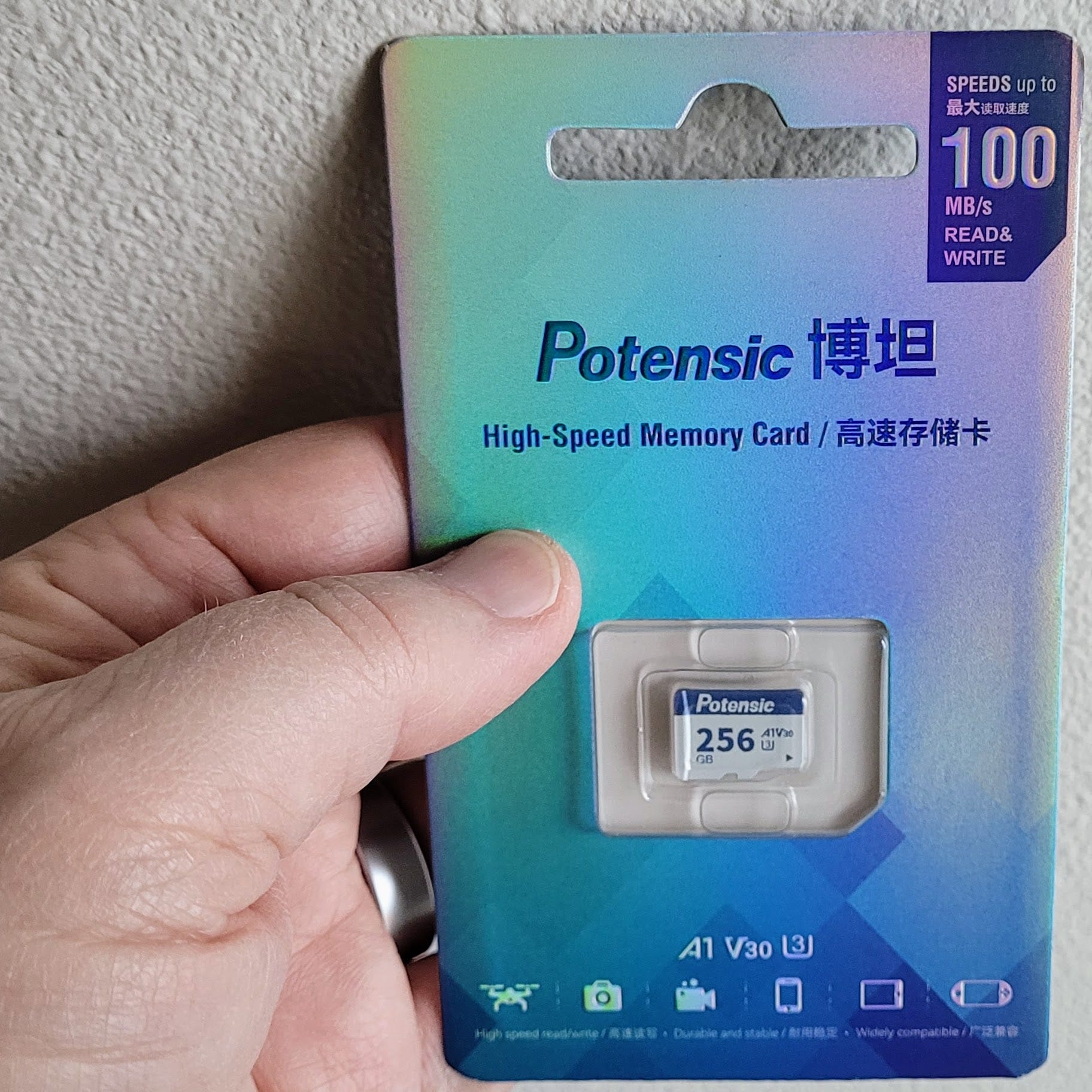
Since that article, I’ve added an airdrop device and a 256 GB V30 microSD card. I’m hoping the little drone has enough lift (I rather doubt it) to raise some monofilament line and a small lead weight over a 150-foot tree.
Need a catchy domain name?
Looking for a catchy domain name for your ham radio website? This one is available at a normal (not premium) price, rare for such a short domain name: hambench.com. The .net and .org versions are also available. This is a good one: short, easily memorable, and descriptive. Jump on it if you’re interested!
Animation of worlds largest Ice Age floods
This is a great animation of the famous Ice Age Floods that sculpted parts of Washington and Oregon. As a geologist, I really appreciate how informative this is without the barrier of highly technical language. I also appreciate that it shows the Okanogan lobe, something that was missed or ignored for many years. Well done! https://www.nps.gov/iafl/learn/photosmultimedia/ice-age-floods-animation.htm
Orca whales in Puget Sound (map)
Have you ever wondered where Orca whales are being sighted in Puget Sound in the Pacific Northwest? Check out the Orca Map: https://orcawatch.org/map
An AI-generated comment on EtherHam?
I receive a comment on one of my EtherHam posts that feels a bit off. I have the website set to require moderation of all comments because I’m a bit paranoid about potential abuse. A new comment came from someone with a number instead of a name in an email address ending in @qq.com. Looking at qq.com, I see Chinese characters. When Google translates it, it looks like a news site. The personal website URL given is a domain that was registered for the first time six months ago. That site opens with a splash page that says AI Video Generation with Realistic Sound. I hate to censor content but in this case, the comment looks like it was generated by an AI engine. I’m uncomfortable exposing readers to this kind of content so I did not approve the comment. If I’m wrong, I hope the person who submitted the comment will contact me directly so that I can approve the comment.
EtherHam domain branding
It looks like EtherHam.com is here for the long haul. To help protect that identity/brand, I also registered EtherHams.com/net/org. I have no plans for these domain names at the moment, but if we go in a more social direction, EtherHams will do nicely, thank you very much. EtherHams also works well for branded items if I go in that direction, because the plural form of EtherHam says we are a community.
Zero Retries Moving to Ghost, Random Wire Isn’t
I understand the many reasons Zero Retries is switching to the Ghost platform. I happen to agree with those reasons. This begs the question: why is the Random Wire still on Substack, especially if my feelings align with those of the Zero Retries team?
For more, read: Zero Retries Is Moving to Ghost, Random Wire Isn’t
Closing
What an interesting week!
Incredible space weather
A massive coronal mass ejection made for tough times if you work HF but was a fascinating event for space weather fans. From SpaceWeather.com:
FOR REAL THIS TIME, THE STORM IS SUBSIDING: A super-fast CME hit Earth on Jan. 19th, igniting almost 3 full days of strong geomagnetic storms. Forecasters were surprised by the longevity of the event, which included at least 12 hours of severe (G4-class) storming. Now the storm appears to be subsiding as Earth exits the CME's wake.
This event opened my mind to the usefulness of internet-connected amateur radio when other systems aren’t working. We ought to be focusing on using whatever systems work best in a given situation, rather than being so tightly married to a certain mode or protocol that we limit our ability to communicate. More resiliency and capability must be built into our systems and procedures if we want to remain useful in today’s world.
Feel free to opine on my point of view in the comments or shoot me an email at tsalzer@pm.me. I do like to hear different perspectives and to learn from you.
Website cloud backup does not inspire confidence
I’m also reflecting on how I used to evaluate whether my grant applications and new web pages made sense. I would ask my mother — an English teacher who knew nothing about my work world — to read what I had generated and then tell me about it. Mom was great about finding the things I assumed others knew. The reason I’m reflecting on this is I signed up for a cloud backup service for EtherHam, and I don’t think I’ve ever had to wade through such an obtuse, poorly written, confusing onboarding process. It seems clear to me they didn’t have someone like Mom try to use their system. The kicker was waiting two days for a response from support because my license key wasn’t working: “Oh, just leave it blank and the system will fill it in for you.” In what world is that normal? Especially when the page says to fill in your license key in the form. Sigh. I hope the service itself is stable. The onboarding process did not inspire confidence.
Send in the clones
The M.2 NVMe drive on my work computer is dying, says Radiograph. I see the temperature is fluctuating rather widely. I’ve ordered a new 1 TB NVMe stick and a cloning dock. I’ll let you know how the cloning dock works. That last time I used one, it came with no directions. That made it a bit more of a challenge to use. Hopefully, this time it will all proceed more smoothly.
With that, it’s time to close the channel and wish you well. The next issue will be published on the very last day of January. I can’t believe how fast 2025 went, and we’re already a month into 2026!
73 to all, and remember to touch a radio every day!


As for keyboard computers, this is my favorite: https://www.raspberrypi.com/products/raspberry-pi-500-plus/
In my note about Ronald Barlow KJ7T(SK), I carried some information from his obituary into the Random Wire without cross-checking it. Reader Chuck (thank you!) offered the following helpful correction.
"BellSouth didn’t become Qwest (with a “w”). BellSouth, one of the seven Baby Bells formed in the 1980s, was eventually merged back into AT&T. Another Baby Bell was US West, which renamed itself Qwest and eventually became part of CenturyLink which renamed itself Lumen."
You might think: well, what does it really matter? The Bell family of companies was huge. I had several peers who worked for a Bell organization and I’ll bet many Random Wire subscribers worked for, or knew someone who worked for, one of the Bells. Out of respect, I’m pleased to publish the correction because it amplifies a bit of history that many of us share, either directly or by association, with friends or family.